Feb 23

Recent Seashell and Coral Projects by Christa’s

Design with seashells is an un-ending fascination for me.  We just finished the most wonderful,  primitive-looking, minimalist and monochromatic panels, which were installed on a bar in the home of a well-known Palm Beach couple’s home.  It was difficult to find, but I managed to  get enough big 8-9” Mushroom Corals to do the job.  It took me two days just to lay out the corals.  My hands were bleeding and raw because those corals are very sharp.  It was truly like a puzzle, getting one to fit correctly next to the other.  For every one used there were four corals that I couldn’t use.  For the background I found just the right color broken seashells.  In between each Large Mushroom Coral was placed a tiny 3/4” one.  Again, I was very lucky to find such small examples of that particular coral at this time.

The wall behind the bar will house a very large, custom aquarium.  Stage right  is a full-length window overlooking the beautiful, azure Palm Beach ocean.  The house is contemporary and rather minimalist in feeling.  The couple, however, has some heavy-duty artwork in and outside of the house.  For instance, there is a beautiful view out the back,  overlooking a large and long garden.  At the end is a reflection pool and a giant Jim Dine bronze parrot and heart.  Great looking!

Bar

Bar

Earlier in 2011 we made 13 wonderful panels for a fantastic Addison Mizner  home on the ocean in Palm Beach.  It was being up-dated and  restored by Jeff Smith, a well-known architect in our area. ..and we all know who Addison Mizner is, right?  If not,, I will tell you.  Mizner was the foremost architect in 1920s Palm Beach.  He mastered many of the incredible mansions along South Ocean Boulevard on the island of Palm Beach and elsewhere in Florida.  I will write more about him another time.

Again, I used the broken shells for the background.  I crushed them up more for this project, though, because the look is much more restrained and delicate.  Mr. Smith and another architect, Sophia, and I worked with the design until it pleased them.  It was all in neutral beige and sand-colors.  I suggested adding the beautiful small Mexican Limpets for a spot of color.  As everyone knows, I love color.  I was so sad when Versace was killed.  He was a master of color.

Panels

Panels

That’s the news of a couple interesting seashell projects on which we have been working.  Now I am about to start two Sailors’ Valentines for the sons of one of  my favorite clients.  The woman is going to make small, circular needlepoint works for the centers of each seashell valentine.  I think she will stitch a darker-blue sea with a lighter-blue sky and perhaps a couple clouds.  I also suggested  that she could put the edge of an “island” at one side, where we could “dock” the wonderful, antique golden ships with enamel I will add to the center of each piece.  So I’m going from the very large to the very small.

It’s interesting that  these two works do not look “beachy” at all.  I strive NOT to let my work become “beachy,” so I don’t cross that line I wrote about in an earlier blog:  the dreaded Kitsch line.

Feb 15

Sailors’ Valentines

When the Dutch started bringing seashells back from travels in the 1550′s, the use of them in art and science was born.

Connoisseurs needed to be supplied with rare species for their Cabinets of Curiosity. Cabinets soon graduated to entire rooms, which appeared, with their magic, in Renaissance gardens, Louis XIV’s Grotto of Thetis at Versailles and Marie Antoinette’s shell cottage erected for her by Louis XVI. Fabulous shell fantasies popped up at Woburn Alley in 1660
Britain, but the major shell blast occurred in 18th century England, France, Germany and Italy. Sans Soucci boasted a fine shell-encrusted room erected by Frederick the Great outside of Berlin, and who can forget the impact of Brighton Pavilion?

Sailor Valentine Box

Sailor Valentine Box

By the late 1700′s brightly-colored shells and corals were more widely available. At the end of St. Katherine’s Dock in London stood a curiosity shop that sold oddities from the sea. Could there possibly have been shells sold in The Olde Curiosity Shoppe of Charles Dickens’ writings? By the 19th century seashells became a medium available to more than just the well to do. Artists, Darwinist scientists and naturalists were collecting shells. Of course, women had the irresistible urge to collect the beautiful shells and decorate boxes, table frames, and seashell mirrors with them. The Victorian women also made arrangements under bell jars.

Seashell Frame

Seashell Frame

These collectors needed a way of organizing their shells. They took boxes, sub-divided them with paper or wood, and neatly stored their little treasures there. Then, of course they started decorating the storage boxes themselves, which eventually evolved into the Sailors’ Valentine. Octagonal boxes were useful because of their geometric design, and easier to divide up into many good-looking compartments.The compartments were similar to the drawers, but more sophisticated.

Sailors Valentine Large

Sailors Valentine Large

Barbados, in the British West Indies, was home to a couple of curiosity shops that provided souvenirs for travelers to bring home to their loved ones. One was called the Shell Company, which later branched off into fossil fuels and became Shell Oil, still with the scallop shell as its logo.

The other was BH Belgrave, which was the main shop for curiosities from the sea, alligator jaws and other souvenirs, including the Sailors’ Valentine. The lore was that sailors gathered shells during their travels and created these valentines for their sweethearts during their long hours at sea. This romantic notion is nice, but unrealistic. It
would’ve been too unwieldy to do the fine carpentry of frame making, plus bringing along all the accoutrements like tiny hinges, glass and the colored papers required to make these little treasures. Imagine doing such fine work in a sailing vessel rocking in the wind and waves.

No, it was BH Belgrave that did all that, and rather mass produced the Sailor Valentine with vanilla sayings like, “Home Again” or “Love the Giver”. The little shop in Bridgetown could do custom valentines, though, if one had a little time to wait. In past communications I showed a picture of one of these custom valentines with a sailor flanked by two naked island girls. That could have hardly been mass produced! In fact, that particular valentine may have been one of the few made the way we like to fantasize– on ship-board during those long hours–but only because he didn’t want prying eyes to see his intimate work!

Sailors Floral Valentine

Sailors Floral Valentine

With the advent of kerosene and a dropping demand for whale-bone corsets, among other aspects of changing times, the many whaling ships sailing the seas lessened and demand for such souvenirs dwindled.

In the 1930′s seashell valentines resurfaced, along with the romantic version of how they were made.

In the 1960′s a small revival of the art came to be, and by the late 1990′s there were many who dabbled in the making of the sailor valentines. Today’s works are exquisite. The array of rare and beautiful shells and corals is absolutely breath-taking, and the talent some of these artist have exhibits the hands of a surgeon. I have seen works that took me several moments to even conceive of the dexterity and eye that the maker had in its creation. It is refreshing to see a
contemporary work of art that is so intricate and finer than many of it’s predecessors.

Sailor Valenite

In the last six months I have, after about a dozen years of working with seashells, begun making Sailor Valentines myself. It turns out that, as ADHD and A-type as I am, I love to do it. The first pair I did was for a lovely client of mine who is of English nobility. She actually makes miniature castles and historic room recreations. She had a guest apartment recently redone, and is using the two valentines under an informal dining table with a glass top. One says” Welcome to Palm Beach” in French, and the other, welcome to her home. It is a charming idea and looks so friendly and appropriate, yet very chic.

The first one took me about 100 hours to make. The second one didn’t take quite so long, as I figured out some tricks, and my dexterity improved so I didn’t have to do any parts twice.

Sailor-Valenite

I have done a box in the “valentine” style, using minuscule shells with an exacting design, and am also making more specialized table frames than before. I have managed to locate some of the most beautiful miniature shells and corals ever seen, and some of the most costly. I just finished a frame for a 5 by 7″ picture that was so costly I must charge $2,400 for it…but it is not to be believed. The intricacy of the shell and coral designs themselves are heavenly. Big Bang theory or whatever, something can’t come from nothing and these little shells sure make me believe in God. Who else would bother decorating such tiny, unimportant creatures so finely, when all they need is a bit of camouflage?

Dec 20

Shells as Religious Symbols and the Meaning of Life

Ah, the Pearly Gates of Heaven.  I’m thinking about them because I recently lost a dear friend, and am thinking that he is meeting St. Peter at those very gates.  According to Revelations, the twelve gates of Heaven are each made from a single pearl.  Of course this is symbolic, or the pearls were rather large (or the gates small..).  In Exodus pearl was the stone on the Ephod, representing the tribe of Zebulon.  There were also nine pearls in the Garuda Purana, one of the books of Hindu.

Symbolism in art, literature and nature is the dimension that gives meaning to objects and even intangibles.  Even in the calcified outer skeletons of sea creatures we find meaning, and purpose to their existence.

The unblinking eyes of fish were one of the most important symbols of Jesus in early Christianity.  He is always watching.  In Greek, “Iesous Christos Theou Yios Soter” means “Jesus Christ, Son of God the Savior”.  Take the first letter of each word and it will spell ICTHYS: the Greek word for fish.

crucifix fish Ichthyology

Crucifix Fish (Ichthyology) Photograph by Brian W. Coad

Symbolism is present in the fish renditions of the sacred chapel in the catacombs of St. Callistus in Rome.  Because of the story of the loaves and fishes in the New Testament, the fish has come to represent the Eucharist.  You will see embroideries of fish on the vestments and alter cloths in churches.  In De Babtismo, Tertullian wrote, “But we, being little fishes, as Jesus Christ is our great fish, began our life in the water, and only while we abide in the water are we safe and sound.”

Pope Benedict

Pope Benedict

Dolphins were used as the symbol of the Christian himself, rather than of Christ.  The dolphin as Christ is most often seen along with an anchor, which is the cross on which Christ died.

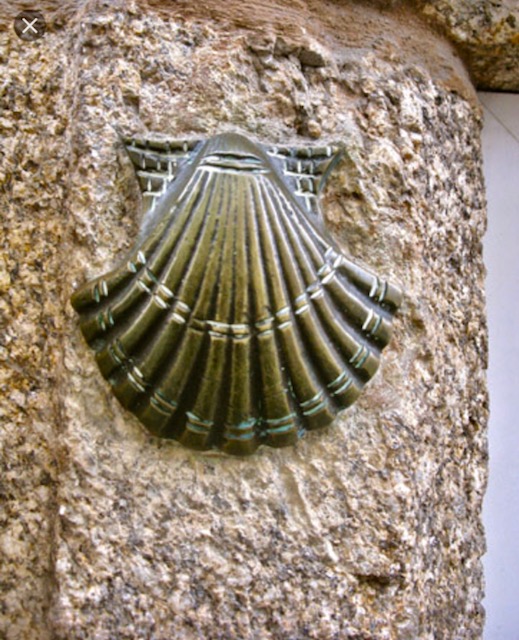
The seashell, especially the scallop, is the symbol of baptism in Christianity.  The baptismal font is often shaped like a scallop, or decorated with one.  The dish used by priests to pour water over the heads of catachumens in baptism is often scallop-shaped.  The scallop, too, is the symbol for the Apostle James the Greater.   St. James used the scallop shell during his pilgrimage to beg for food and water.  Even the poorest people could fill the small shell, so he always found help along his way.  Later, followers of St. James wore the scallop-shell symbol on their hats and clothes and it became the symbol of pilgrimage.

Small Scallop Shell Wall Fountain

Small Scallop Shell Wall Fountain

Fertility is also associated with the scallop shell, as exemplified in ancient and renaissance  paintings of Venus, the Roman goddess of fertility and love.  She is often shown coming out of a scallop shell.  Perhaps this is why some pilgrims, walking the way of St. James, used the scallop in a pagan ritual to encourage child-bearing.

The conch shell was one of Buddhism’s eight auspicious symbols, signifying truthful  speech and strength.  It also appears in the Hindu tradition of prayer, and was the weapon of choice of mystical mermaids and mermen, looking up to the magnitude of waves across the ocean.  As such, its mystical meaning  alludes to strength and fortitude.

Conch

Conch

Sunken Treasure Conch Shell

Sunken Treasure Conch Shell

The conch, or shankh, is the most ancient musical instrument known to man.  Obtained as a gift from the great ocean, it was held as sacred, and reference is found all over ancient Indian literature.  It is seen in the hands of almost all gods and goddesses, whenever they were happy or going off to war.    In Buddhism the conch shell’s call is meant to awaken one from ignorance, and is a sign of victory over suffering.  In Chinese Buddhism, the conch shell signifies a prosperous journey, and in Islam it represents  hearing the divine world. 

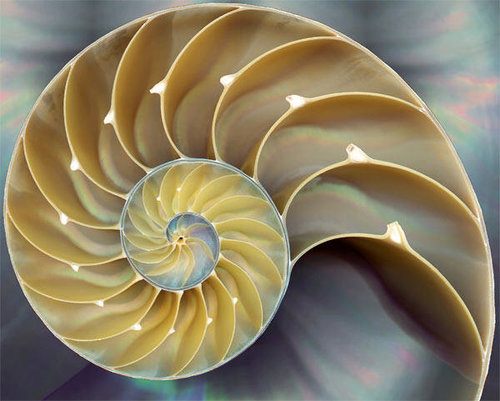
The spiral formation inside the conch is symbolic of infinity.  The space , which gradually expands in a clock-wise direction.  The shell is like the human journey of life.  The hard casing protects life.  The pearl inside (a scallop or oyster), and its aquatic nature associates it with the feminine, lunar, and virginity that is symbolic in music. The conch shell’s spiral form and relation to water cause it to represent the beginning of existence.   This sounds like the place poet William Butler Yeats found his spiraling gyre symbolism so prevalent in his writings.

Cowrie Shells

Cowrie Shells

Woman-with-Cowries

Woman-with-Cowries

Just look at a cowrie shell and you can guess why it has traditionally been used as a symbol of fertility.  Shaped like labia, small cowries were sewn into the hems of Indian women’s dresses to encourage love and fertility.  I removed them from all my hems after my one and only son was born because he was all I could afford.

Make sure to check out Christa’s accessories and jewelry gallery with conch, cowry shells, scallop designs and more.

Nov 03

How to Make Seashell Frames

A step-by-step video on how to make seashell frames by Christa.

Nov 03

Seashells: The Salt (and Pepper) of the Earth

With shock and dismay I see some pretty awful mid-century kitsch used in design today, and I guess it works in some instances.  Shell kitsch, however, is so bad it’ll never be good. It’s the craftsmanship as well as the tastelessness of the stuff that  makes it so awful.

When I tell someone that I make things out of seashells for a living I know what they envision.  They imagine me, bent over a table, gluing little, spotted-cowrie heads on little cowrie bodies to make a shell mouse that can play cards with the other little cowrie-shell mice, all sitting neatly at a flat Scallop table…or making an Easter purse of straw with dyed shells and fake pearls, like the one below.

kitsch Easter Purse

kitsch Easter Purse

Salt & Pepper Shaker

Maybe people imagine me gluing the tiny, little shells on salt shakers.

But first I must collect the shells.  More than several people, over the years, have asked me if I collect the shells I use myself.  My atelier, where we make our pieces, has walls and walls of more than one million shells.  So, of course I answer, “Yes”.  I fly to an exotic beach in the wilds of the Philippines on the weekends, combing the sand, free diving and collecting shells, only to be back in the shop Monday, by noon.

What a life. Travelling to breath-taking beaches and crystal seas to hunt for incredible creatures with which to decorate and create wonderful objects.  Sounds like a dream, but between the dream and the reality falls the shadow.  I certainly do bring back interesting things to use in my work from my travels, but nothing as romantic as that.

A lot of awful and hideous things, actually, come from the Philippines.  When one has to make hundreds and hundreds of the same, boring thing it would be hard to keep things interesting.  And, anyway, the point of the exercise is to make all of the things like.  Some pretty nice things come out of the Philippines, nevertheless.  Currey & Co. , a lighting firm, started selling seashell things shortly after I did.  It is a big company that manufactures overseas.  The designers create good-looking objects.  The problems are that they are, one:  common, and, two:  are made by unsophisticated hands.  The things have a tight, rigid feeling, full of tiny, cheap, like shells all in rows, and fit together like puzzles.  Just like the seashell things one buys at the souvenir shop.

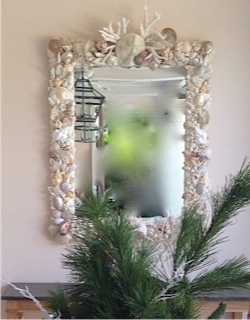
The things we make go in so many directions.  We make a mirror, called the “Victorian” that is tight and neat.  Mostly, though, we try and keep the look loose and natural.  My seashell mirrors have more of an organic quality to them, most of the time, and we tend to like lots of texture.  Sometimes the job at hand requires a designed, more quiet hand, which we can have too.  But there is no way that anything from my shop could be mistaken for something made overseas, unless you are thinking of France, Italy or England—and another century.

Victorian Mirror

Victorian Mirror

At Christa’s South we can do anything you want.  We can make our work minimalistic, baroque,  antiqued, loose or extremely organic.  No matter what we do, though, it will be balanced and done with the utmost respect for the project at hand.

Bathroom 01

Bathroom 2

These cabana bathroom pictures show both organized shelling and organic.  Note: The beautiful feathering of the scallop shells over the top of the mirrors, which could never be done by an untalented hand.

Another difference between my creations and those of mass-produced stuff, is that each shell  is hand-picked, and we use Grade A shells.  Shells are graded just like gems.  Some specimen shells and corals are extremely costly, and getting more so every day.   The US government is guarding many corals with a watchful eye.  We’ve been working for three months to get two pieces of Blue Ridge coral shipped to Canada.  So far we have purchased two licenses, and we have to show where that coral was harvested, by whom, and where it has been before it came to me.  And this isn’t even an endangered coral (I would not sell such a thing).

It is interesting to see all the directions that seashell design can take.  With the individual beauty of each shell it is shocking that sometimes such ugly kitsch is remotely interesting to anyone.  To each his own?

Shell Inspired House

Shell Inspired House

Oct 12

More Than Just Mirrors

Lots of seashell mirrors dot hallways and powder rooms all around town here, and all over Los Angeles, Long Island, New York City, Chicago… They serve an obvious and “safe” decorating purpose, and are practical. Using shells in an architectural setting can be interesting, and a little more of a surprise than a mirror or even a chandelier. I just takes a little guts, but once you make the decision and the project is completed you will undoubtedly be thrilled, I promise.

We have done quite a few exterior and interior installations, including moldings, ceilings, fountains and entire rooms. Something that is absolutely wonderful and extremely effective is to shell encrust a fireplace, I have done several, and each one so very different from the one before it.

One of the fireplaces was featured in the May-June, 2009 issue of Southern Accents magazine. We actually did a second one for this charming and sophisticated client’s guest apartment. The second one is green and white, neatly done in rows up the side columns like a barber pole. It is simple and fresh. Featured on the top center are just a few magnificent, large shells.

Featured Fireplace

Featured Fireplace

White & Coral Colored Finials

White & Coral Colored Finials

The fireplace we did in her living room is much more organic in design. It, too, has neat borders and is organized, but it is much more free-formed and textural than the other one. Her husband’s 18th century portrait of a relative looks stunning above it. I also designed wonderful white and coral-colored finials for each end of the bamboo curtain rods, from which a light and airy linen drapery hung. The whole thing is very effective against the coral walls. It is not wimpy, which I respect with all my heart.

I designed lots of things for one Renaissance man I know. He is a financial genius and businessman on the one side, and has a fantastic design sense on the other side. He has better taste than many designers I know. Both sides of this man’s brain are turning at rapid RPMs all the time.

Morrocan-Style Fireplace

Morrocan-Style Fireplace

Aurelius Bust

Aurelius Bust

Poseidon Columns

Poseidon Columns

This wonderful friend invited my son, Roman, and me up to his compound in North East Harbor, Maine several years ago. One of the guest houses is full of my shell creations. The fireplace was done on a panel and sent to him in a crate. It is Moroccan in style. One of my crusty, ancient-looking busts greets guests as they go up the stairway. At the top are two magnificent columns all wrapped in pearled, white snail shells and fancy, rare Turbo Sarmaticus shells from South Africa.

Seahorse mosaic fireplace

Seahorse mosaic fireplace

19th Century Style Fireplace

19th Century Style Fireplace

In my own home, a circa 1924 Spanish-style villa in Palm Beach, is the original fireplace. It is cast stone, with Italian-looking scrolls and animals. I made a delicate mosaic of seahorses and a crest between he firebox and the mantle. Everyone adores it–or at least they say they do…

As you see, there are always unusual and different directions the medium of seashells can go. It never ceases to fascinate me. If you want to se a sample of another, completely different fireplace, look behind my desk in the shop and you’ll see one done in a delicate, 19th century style.

Check out our Architectural Gallery and find more seashells designs. Hope to see you soon.

Oct 06

A Bit of Frothy Seashell History

Venus in a Half Shell - PompeiiSEX!  It always boils down to that age old hobby.  You can’t talk about any subject without it coming up…even seashells.  As I did research for this, my virgin blog, I started with the history of the shell in art.  The oldest example of seashell art I could find was a sexy Venus standing on a clam shell in the House of Marina in Pompeii.  This painting was done before 39, the year Mount Vesuvius stopped time for that resort.   It is believed to be based on a lost Greek painting supposedly owned by Julius Ceasar, done  by a man named Apelles.  In this depiction, Venus, on the half shell, is near Cupid and a nereid on a dolphin.  She has curls and sports jewels of gold.  Otherwise she is unclothed.

Plato suggested that, of course, Aphrodite (Venus in Rome) is nude because comtemplation of physical beauty allows the mind to understand and inspire intellectual love.  Sounds like a line to me.  Plato was in the hobby shop.

Venus

Venus

In Sandro Botticelli’s Venus on the Half Shell (Nascita di Venere) is another sexy beauty nudely standing in the half-clam, with only her hand for a fig leaf.  She was possibly painted for Lorenzo Medici’s Villa di Castello, although it was never found in his inventory lists, as was Botticelli’s Primavera.  Venus emerged from the sea and brought love to the land. In this neoplatonic age during the Renaissance , the earthly goddess brings carnal love, while the heavenly brings intellectual love.  The sea, full of mystery and the unknown, represented Heaven.  Venus turns the intellectual to the carnal love as she steps ashore and becomes Primavera.

The seashell has had many interesting spots in history.  The rare and beautiful purple dye from one snail provided royal color for the ceasars’ robes.  The Nautilus shell’s chambers symbolize eternity.  The sexy shapes of the shells themselves are most interesting.  When my son, Roman, was in Kindergarten at the Palm Beach Day School I brought shells and a frame for the children to make a large mirror for the school auction.  The little girls grabbed the smooth cowries, rounded and with a labia-like underside and a slit, and clam shells, while the boys went for the long, pointy cone and whelk shells that had a curiously phallic shape.  It is inherent in humans to start a hobby before they even know what the hobby is.

Leave it to the Victorians to turn Venus into a prude, or do away with her completely.  Women of this time busied themselves with what was called Fancy Work, which involved either stitchery or doing fine work with seashells fully clothed.  The wonderful 19th century Follies in England and Ireland show some of the most elegant examples of fine shell work.  France and Italy boast some fantastic shell works as well.

Barbados was a major stopover port for the American and British soldiers from 1830-1880.  BH Belgrave, “dealer in Marine Specimen and natural manufacturers in Fancy Work” was the main supplier of shell art, coral jewelry, shark bones and other natural curiosities from the sea.  His shop sounded strangely like my own shop.  He did custom work, but kept a stock of Sailor Valentines for seamen to bring home to their honeys and wives.  It seems to be mostly myth that sailors collected tiny shells and made these romantic memoirs on shipboard during the long, long hours sailing at sea.  They most often bought them right at Belgrave’s, with a nice message like, “Ever Thine” or “To a Friend” written in tiny seashells.  Often there was a spot to insert a photograph.  One wonderful photo was of two sailors on either side of a naked island girl–an extremely racy theme for Victorian sensibilities.  I doubt that this particular valentine was brought home to anyone’s honey, but, rather, hidden from such.

Hermit Crab

A modern take on sex and the seashell is kinky.  Called Nudity and Your Hermit Crab, this idea adds a whole new dimension to “shell porn”.  The essay directs one to strip completely naked.  Bring out your Hermit Crab from its cage and let it explore the inside of your thigh.  “Let the Hermit Crab explore your body,” author Blue Lobster writes.  “Spend some time with your crab completely nude,” Lobster suggests.  As you explore one another’s bodies you will realize that clothes are similar to the Hermit Crabs shell–”temporary and deceptive…and the shame of nudity is a yoke of societal concern.”  I wonder if the crab is as neoplatonic?  I don’t think he gives a damn and I don’t think he has a hobby, that crab, but I’m dreadfully afraid that his master does…

Sep 12

Welcome to our new Blog!

Thank you!